
Popular South African Restaurant Opening In 2 New International Markets – With 9 More Coming.

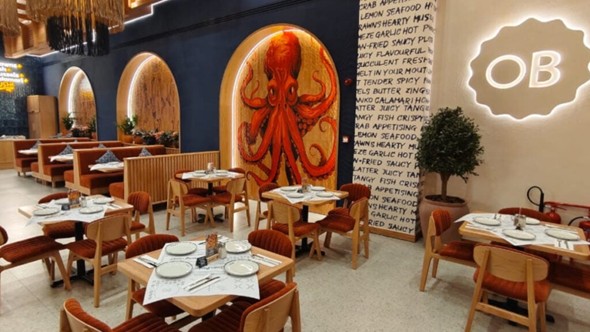
Ocean Basket is expanding its offerings into several new markets across Europe and Asia, aiming to add to its over 200 locations in 16 countries.
Ocean Basket was founded in Pretoria in 1995 by brothers Peter “Fats” and George Lazarides, who looked to bring their mother’s Greek cuisine to a wider audience.
The restaurant chain launched its first international expansion in 2008, opening its first location in Cyprus.
It has now expanded to 16 countries, including the UK, UAE, Qatar, Kuwait, Kazakhstan, Malta and several other African countries.
Speaking to BusinessTech, John Camacho, Chief Marketing Officer at Ocean Basket in Europe and the UK, said that the international expansion remains a key pillar of the chain’s growth strategy.
“We are currently in the final stages of concluding country licence agreements in two new international territories, which we look forward to announcing once finalised,” said Camacho.
Beyond these two new international territories, the chain is focused on carefully selected growth markets.
This includes several Eastern European countries, such as Romania, Poland, Bulgaria, and Croatia.
Camacho said these countries are seeing strong urban growth, rising middle-class consumption, and increasing appetite for affordable premium dining.
In Asia, Ocean Basket is also exploring opportunities in Singapore, Thailand, Malaysia, Vietnam, and the Philippines.
The interest in Asia forms part of its long-term strategy to build presence in high-growth Southeast Asian markets.
“Importantly, we do not pursue expansion for the sake of footprint. Our entry into any new territory is dependent on securing the right local partner and ensuring supply chain alignment,” he said.
How it chooses new markets
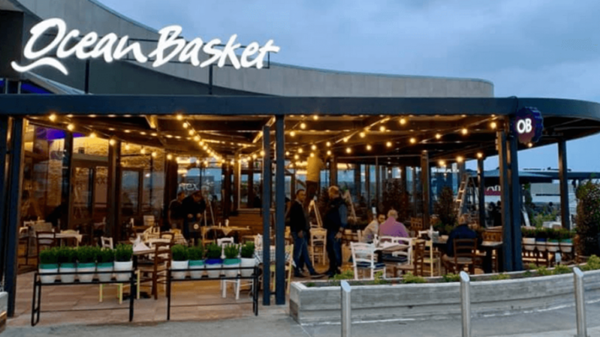
Ocean Basket in Cyprus
When assessing a new territory for expansion, Ocean Basket’s starting point is always an in-country partner who needs credibility and an operational track record.
“We look for partners who understand hospitality at scale, have successfully operated multi-site businesses in their market, and share our long-term brand vision,” said Camacho.
The second key part is supply chain integrity, with Camacho stating that Ocean Basket’s differentiation lies in its core seafood offering and flavour profile.
He said that the chain checks if it can reliably import and maintain the quality of seafood products. “Without this supply chain confidence, we do not proceed.”
The chain also does not base its decision on existing seafood demand, believing that strong brands, like its own, shape demand.
While the chain still focuses on its brand DNA, which includes generous portions, it will adjust menu elements to reflect local taste preferences, dietary requirements, and regulatory frameworks.
In the Gulf Cooperation Council (GCC), which includes several Middle Eastern countries, menus must comply with full halal standards and be calibrated to local dining habits.
In certain European and Central Asian Markets, the group refines its beverage mix, service rhythm and menu composition to align with how guests prefer to dine.
In Kazakhstan, the chain offers soup and tea offerings to align with local consumption patterns.
The chain also offers a larger seafood selection in Cyprus, which includes lobster, baby crabs, scallops, octopus, and a range of whole fish.
New focus in South Africa
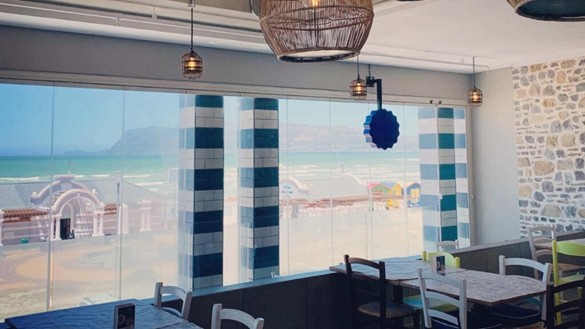
Ocean Basket in Muizenberg, Cape Town
The company’s expansion over the last 18 months has been more about broadening its reach into new consumer segments than about geographic saturation.
Camacho said the strategic shift has driven meaningful revenue growth and strengthened the overall brand position in the South African market.
“As a result, expansion is no longer defined purely by adding traditional restaurants in existing nodes.”
“The opportunity now lies in unlocking new catchments and occasions through differentiated brand formats that allow us to serve a wider audience.”
The chain is thus working on new format strategies that will enable it to enter locations and environments where its traditional full-service model was not viable in the past.
While the chain has already expanded to over 200 locations, the focus remains on seafood, where its expertise in sourcing, supply chain management and menu development lies.
“Rather than diluting that focus, we see a significant opportunity to further elevate and expand within the category itself.”
“Seafood remains underpenetrated in many markets, and we believe there is still substantial room for innovation — whether through new product development, premiumisation in select territories, or enhancing accessibility and value in others.”